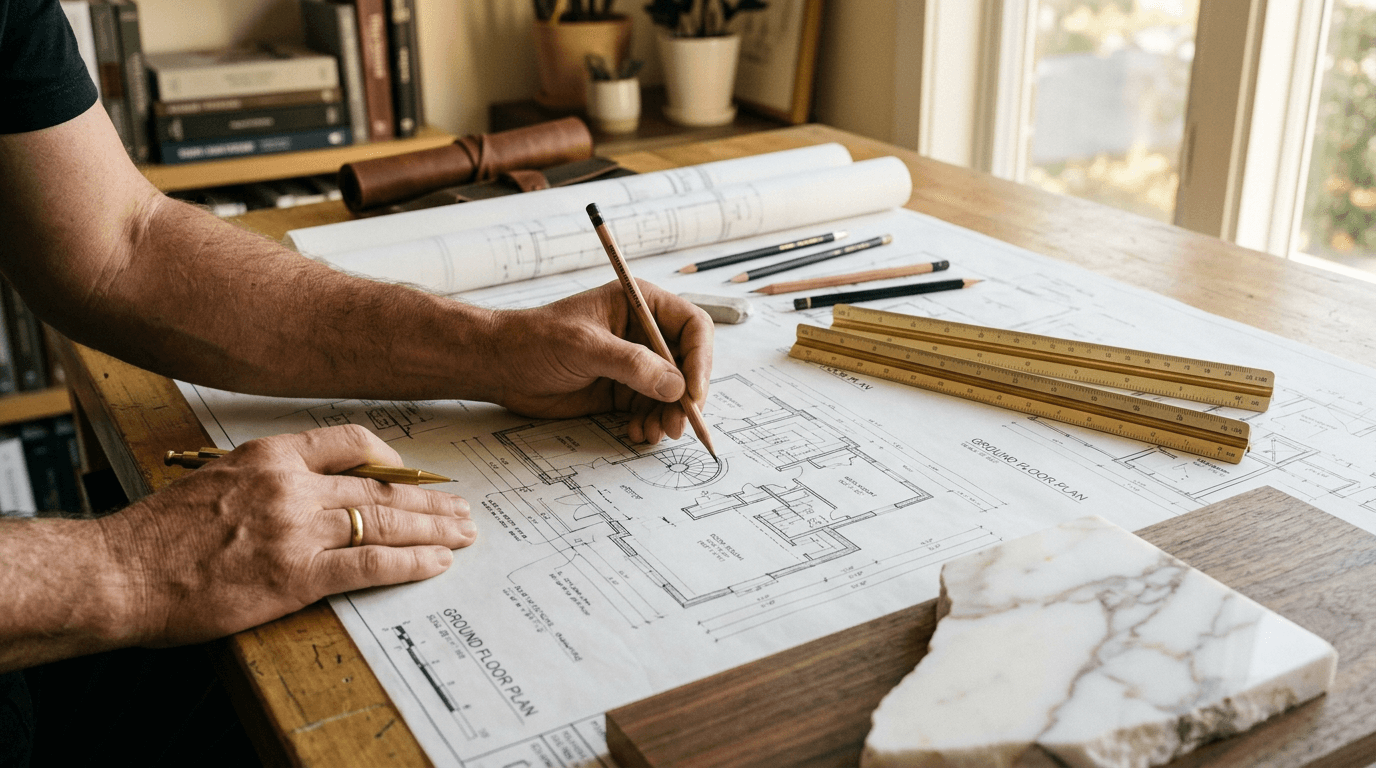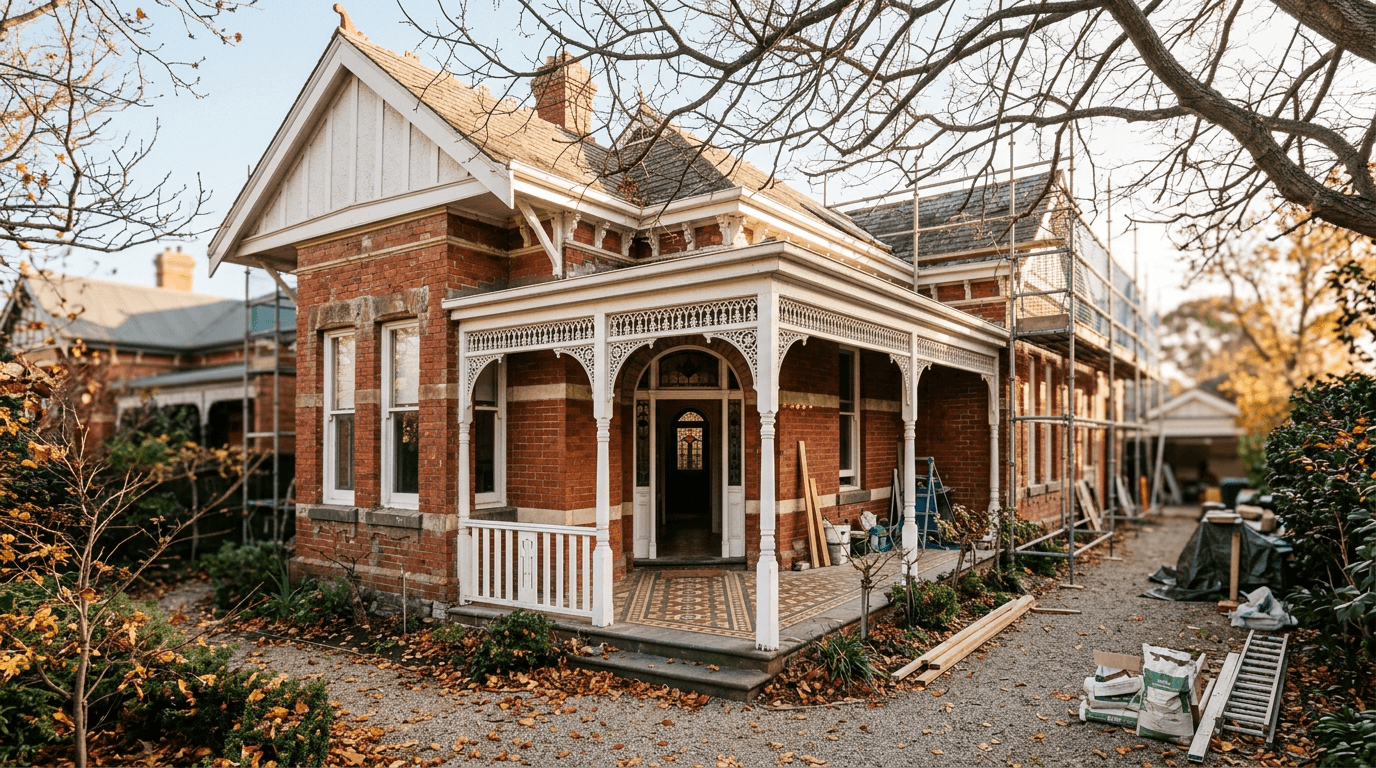
I've been on enough heritage renovations in Hawthorn and Kew to know where the surprises hide. The street view looks fine. The bricks look square. Then you pull a wall back and find lime mortar that turns to dust in your hand. Heritage renovation in Melbourne is rarely a problem of design. It is almost always a problem of preparation.
If you are about to start one, here is what we plan for before a single trade walks on site, and what most homeowners only find out after they have already signed a contract.
Start with the overlay, not the design
Before any drawings are worth paying for, find out what protections sit over the property. Most period homes in Toorak, Hawthorn, Kew, Canterbury and Malvern fall under a heritage overlay through the local council. Some are also listed at state level through Heritage Victoria. The two are different conversations.
A local overlay usually controls the façade, the roofline visible from the street, and sometimes the front rooms. A state listing can extend to internal joinery, ceilings, even original tiles. The honest answer is: until you have read the planning scheme citation for your property and spoken with the council heritage planner, you do not yet know what you can change.
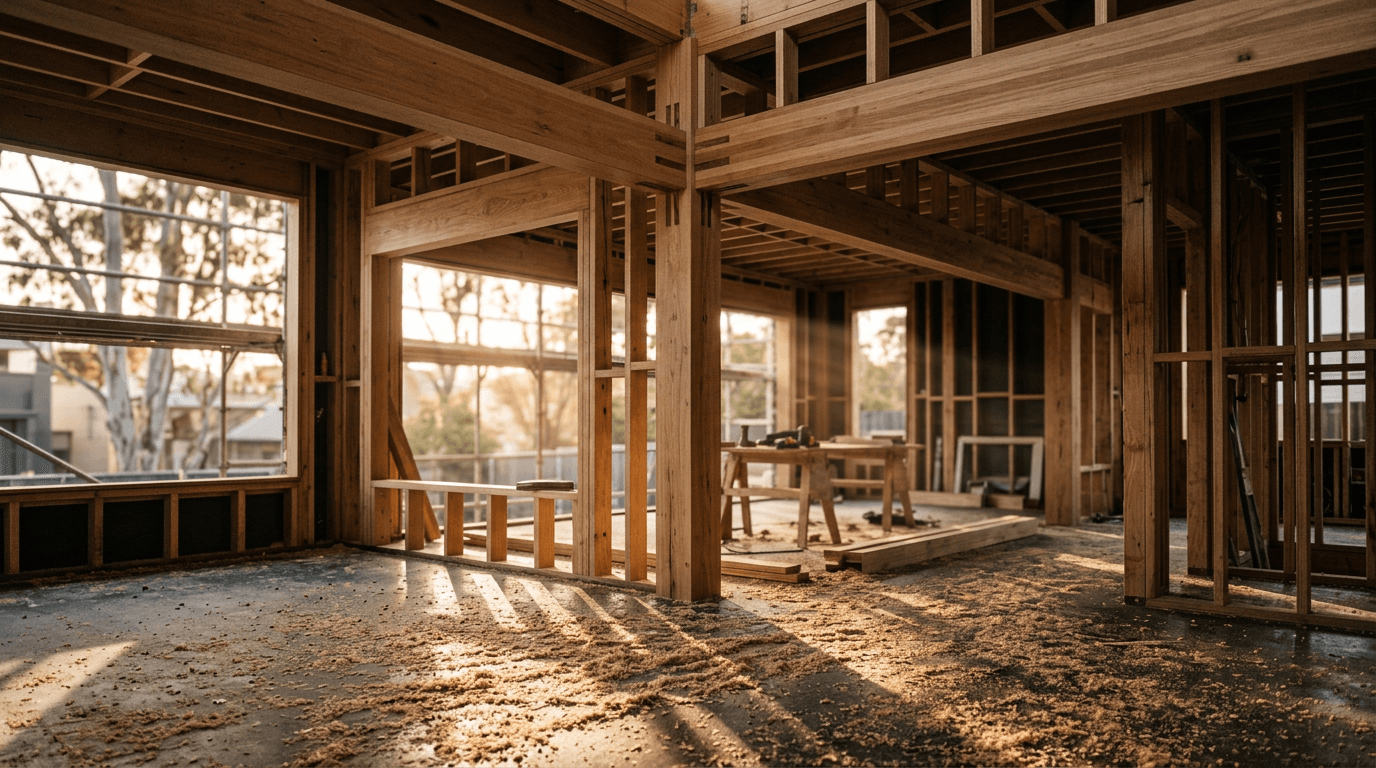
Expect surprises in the structure
Victorian and Edwardian homes were not built to modern engineering tolerances. We routinely find lime mortar that has lost its bind, single-skin walls behind plaster, lath and lime ceilings that crack the moment you lean on them, and floor joists running directions you would never design today.
What this means in practice: a contingency of 10 percent is not enough for a true heritage build. We start clients at 15 to 20 percent and explain why. The structural unknowns only reveal themselves once selective demolition begins. You want a builder who tells you that before you sign, not after.
Match materials, do not impersonate them
Heritage façades are unforgiving. A modern render mix over old brick will trap moisture and blow off in two winters. Replacement timber needs to be the right species, the right grain orientation, and the right finish. Slate roofs need slate, not a composite that looks fine in year one and reads cheap by year five.
Where you do want to be modern is in services. Original homes were not built with insulation, weatherproofing, or wiring loads we now consider normal. Hide these behind the heritage envelope, do them well, and the house feels period from the street and contemporary inside.
Plan the council process honestly
Most heritage permits in Melbourne run somewhere between three and nine months. The variation depends on whether neighbours object, whether the council heritage advisor is on board, and how good your documentation is. A planning permit application that arrives with photographic context, façade preservation drawings, and a clear materials schedule moves faster than one that is light on detail.
Worth knowing before you sign anything: the planning permit is a separate process to the building permit. You cannot start construction on the strength of the planning permit alone.
Pick a builder who has done it before
Heritage work is not the same trade as a new build. The sequencing is different, the trades are different, the contingency is different, the council conversations are different. If your shortlist of builders has only done new builds in growth corridors, this is the wrong project for them. Look at their completed heritage projects, ask to see one in person, and ask the owner about the surprises.
What to do before you commit
A practical short list:
- Read the property's heritage citation through the local planning scheme.
- Have a structural engineer walk the home with your builder, not just review drawings.
- Budget a real heritage contingency of 15 to 20 percent, not 10.
- Get one heritage-experienced builder involved at design stage, even if you have not formally engaged them.
- Confirm both planning and building permit timelines before locking a move-out date.
If you have a period home in Melbourne you are thinking of renovating and would like a builder's read on the realistic scope, get in touch and I will walk it with you.
This article shares general guidance from our experience as luxury home builders in Melbourne. Every project is different. For advice on yours, get in touch.