Two patterns dominate the luxury flooring conversation in Melbourne right now: herringbone and chevron. They look similar in a small Instagram square. They feel completely different in a 90 square metre family room.
Here is the honest comparison from someone who has laid both, plenty of times.
The pattern, plainly
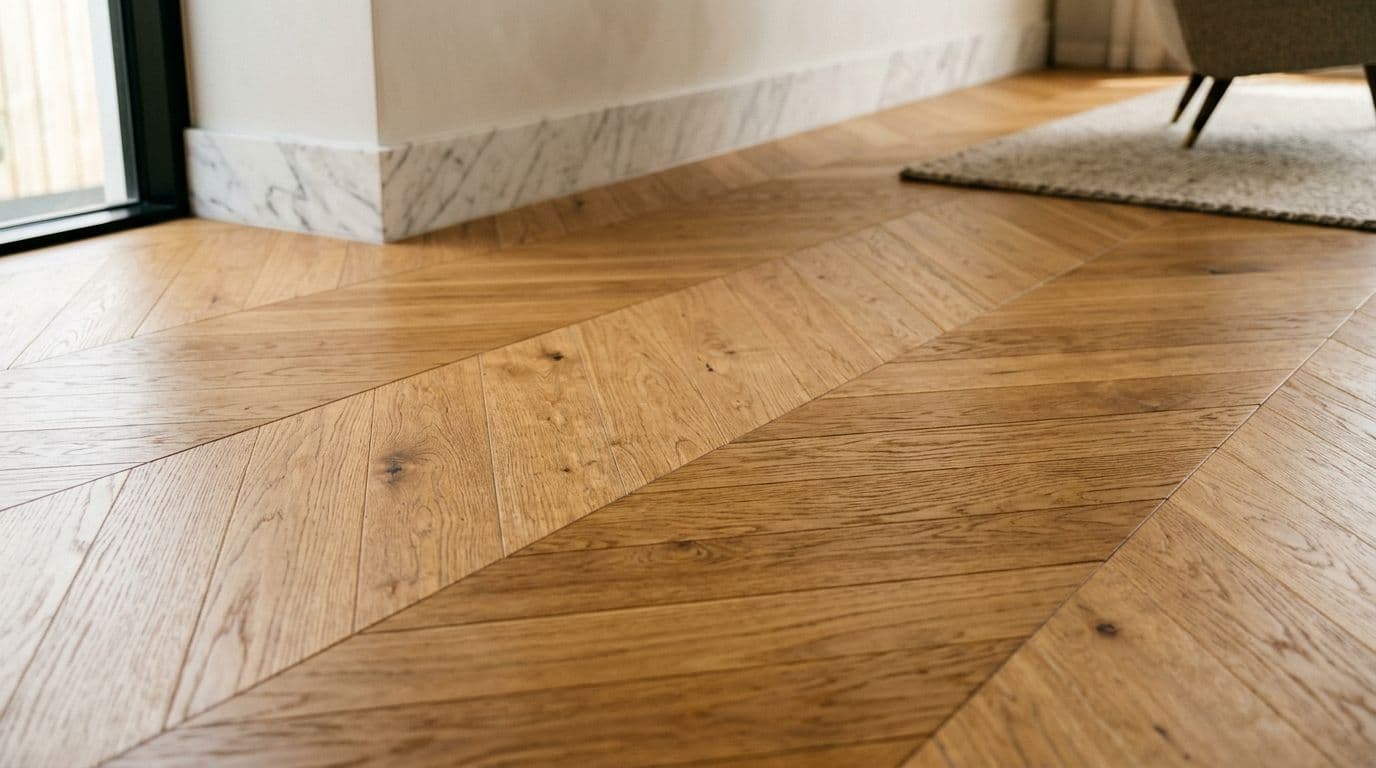
Herringbone uses rectangular boards laid at 90 degrees to each other, forming a zigzag. The boards meet at their ends. Chevron uses boards cut at a 45 or 60 degree angle, so the points line up in a continuous V down the room.
Herringbone reads classic, slightly busy, and feels at home in heritage interiors. Chevron reads more European, more directional, and tends to suit contemporary architecture or French-influenced design.
Board size changes everything
A 90 by 600 mm herringbone block reads completely different to a 130 by 800 mm one. Bigger boards calm the pattern down. Smaller boards multiply the visual rhythm. In a heritage front room with low ceilings and intricate cornices, smaller is usually right. In a contemporary open plan with five metre ceilings, go larger.
Worth knowing: a quote priced on smaller boards looks cheaper because the boards cost less. The labour is the same per square metre or higher. The labour, not the timber, is the real cost.
Engineered or solid?
For most Melbourne homes I specify engineered oak. A premium engineered board with a thick top layer of European oak, glued to a stable plywood core, is more stable across our seasonal humidity swings than solid timber. We see fewer cupping issues, fewer seasonal gaps, and we can still sand and refinish two or three times over the life of the floor.
Solid oak still has a place, particularly in homes where heritage planning requires it. But the technical advantage now sits with engineered.
Finish: oiled, lacquered or smoked
Oiled floors look more natural, feel soft underfoot, and can be spot-repaired. They need re-oiling every couple of years. Lacquered floors look more uniform, hide marks better, and need full sanding to refinish. Smoked oak gives you the deep tonal range you cannot achieve with stain alone, because the oak is reacting at a chemical level with ammonia.
Match the finish to the household. Two big dogs and a busy family kitchen? Lean lacquered. A quieter primary residence with appreciation for patina? Oiled is honest and ages beautifully.
Substrate, screed and underfloor heating
The pattern only looks as good as what sits beneath it. We work to a flatness tolerance of 3 mm over 3 metres for parquetry. That often means a self-levelling screed before the boards go down.
If you want hydronic underfloor heating, the timber specification has to be confirmed for it. Engineered oak is generally compatible. The screed needs a proper commissioning cycle before the floor goes down, otherwise residual moisture moves through the boards and tells you the truth six months later.
How to decide
- Period home, traditional architecture: herringbone, medium board.
- Contemporary or French-influenced: chevron, large board.
- Open plan with strong ceiling height: large board either pattern.
- Family with heavy traffic: engineered, lacquered.
If you want to see the boards we are specifying right now and compare them in person, send us a note and we will bring samples.
This article shares general guidance from our experience as luxury home builders in Melbourne. Every project is different. For advice on yours, get in touch.