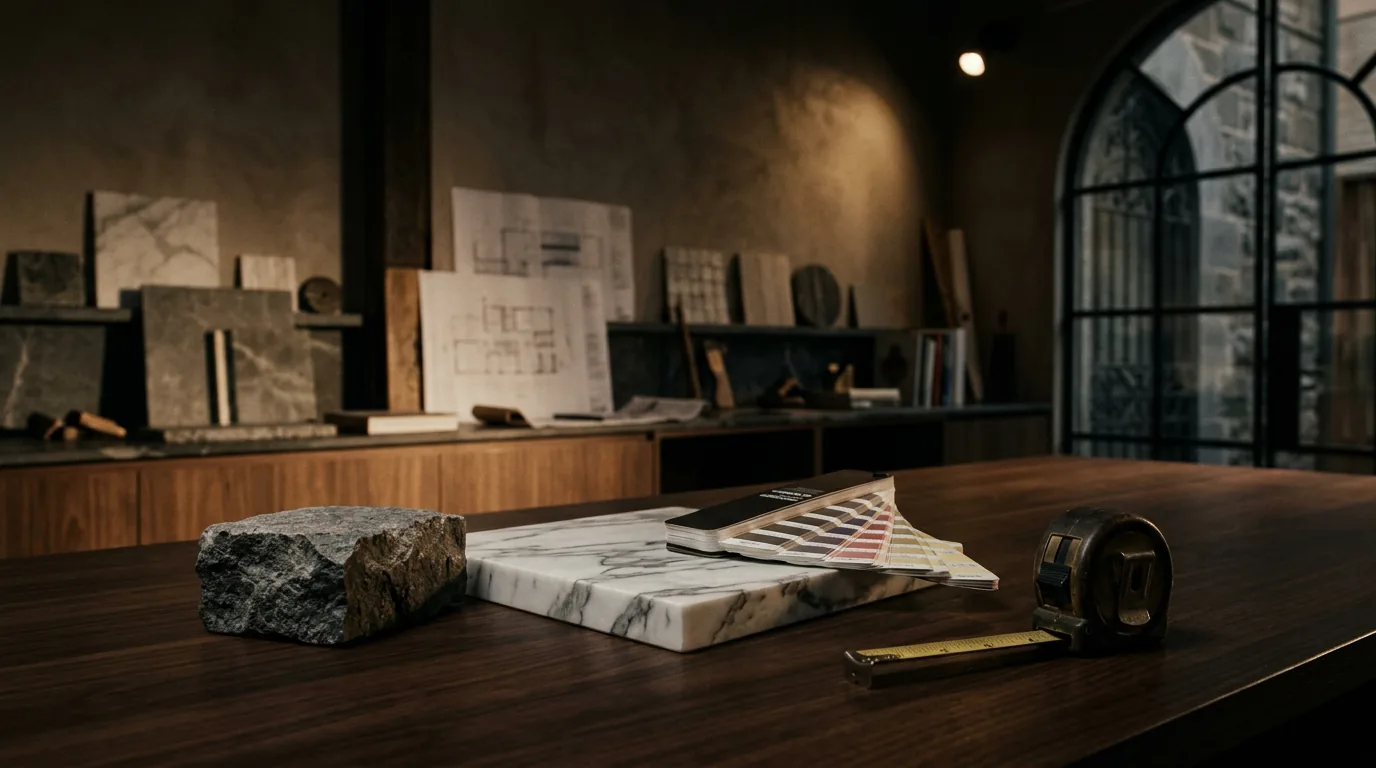
Every luxury kitchen we build in Melbourne starts with one decision: what is going on the bench. It sets the tone for the cabinetry, the lighting, the splashback, and the price of the room. It is also the decision most likely to cause regret three years in.
Here is how natural marble, engineered quartz, porcelain and sintered stone actually behave once you are living with them.
Natural marble: beautiful and honest
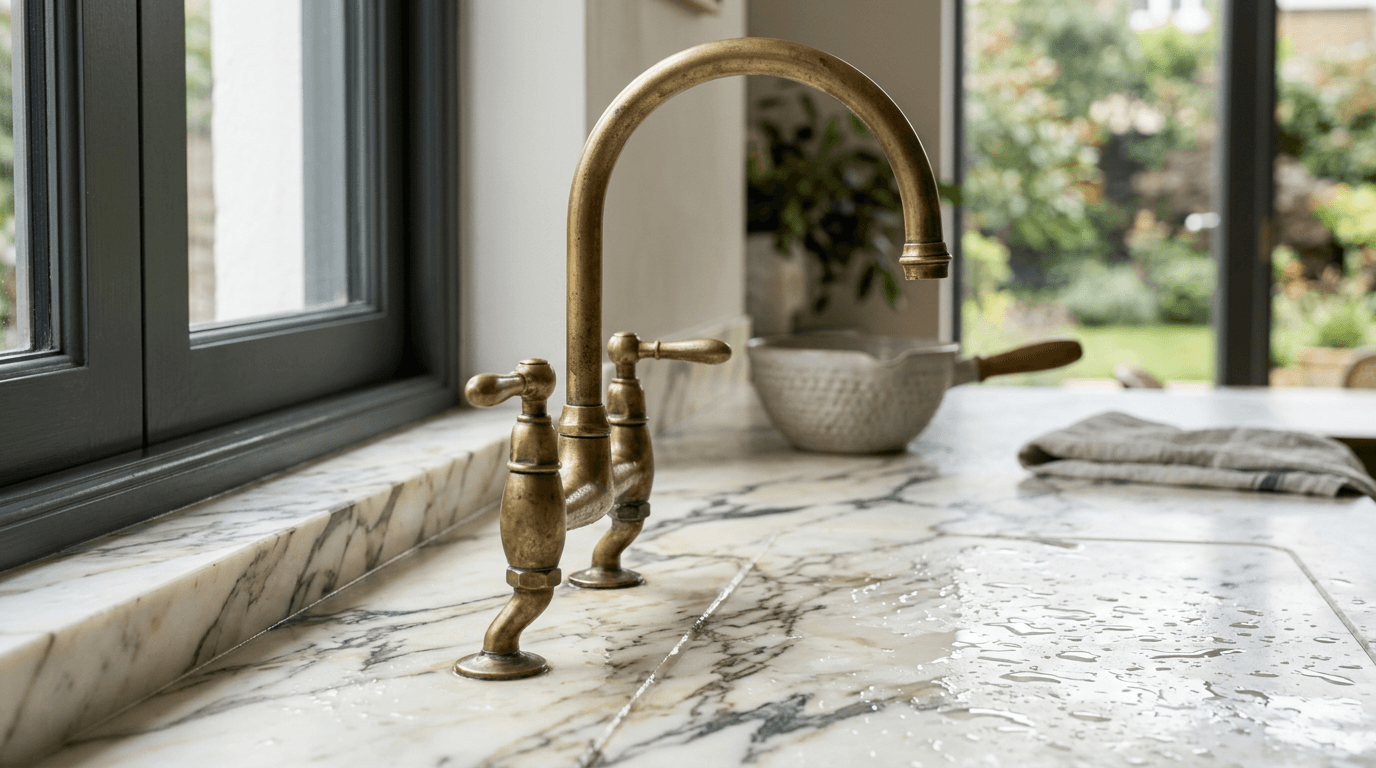
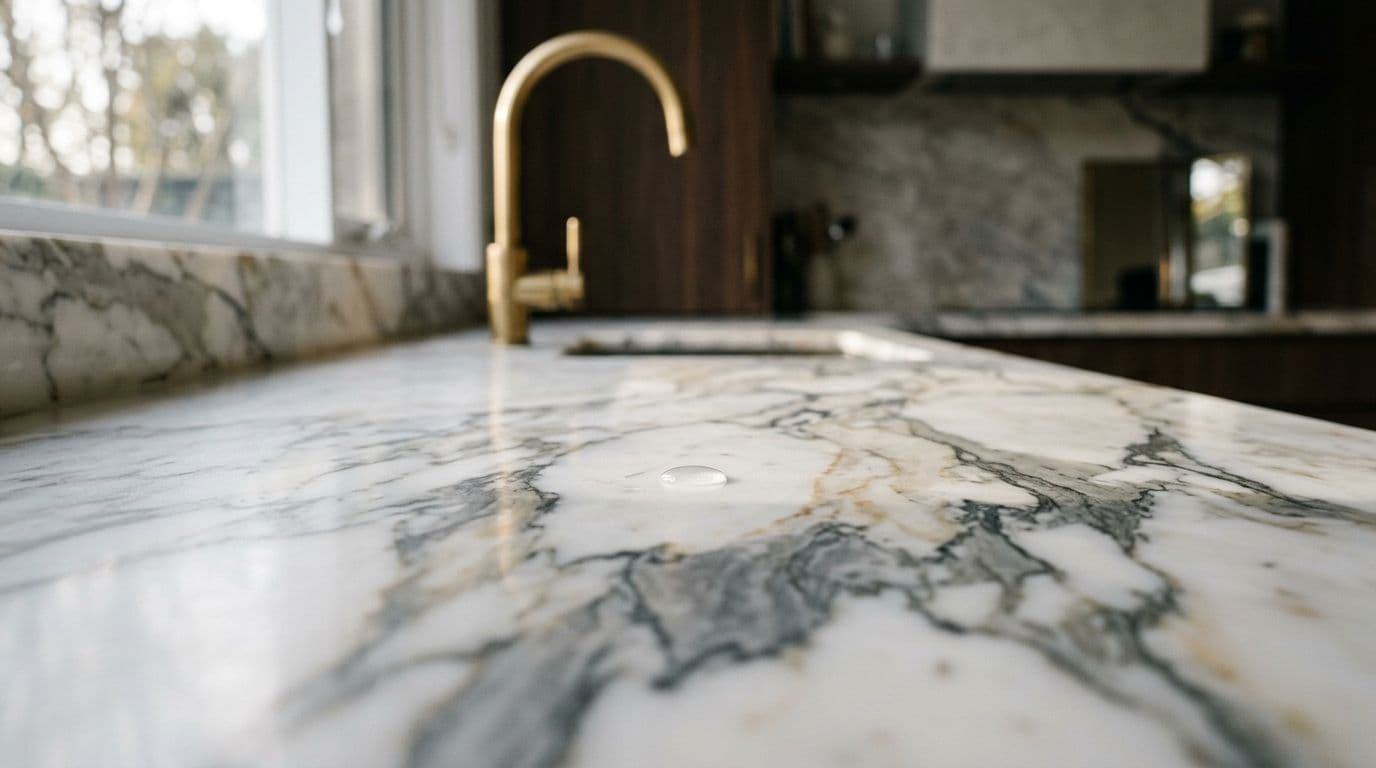
Nothing engineered has yet matched what Calacatta, Statuario or Arabescato look like when the morning light hits them. The veining is geological, not printed. Each slab is one of one. For our clients in Toorak and Brighton, that is often the only point that matters.
Worth knowing: marble is calcium carbonate. Lemon juice etches it. Red wine stains it. A hot pan can leave a mark even when sealed. We seal it on install, we re-seal it yearly, and we tell our clients honestly that the bench will gain character over time. The marble in our own home is not pristine. It is not meant to be.
Engineered quartz: the workhorse
Quartz composites like Caesarstone and Silestone have run kitchens for two decades for a reason. They are stain resistant, scratch resistant, non-porous, and reasonably priced. Patterns now include very convincing marble looks. Honed finishes get close to natural stone in feel.
Where they fall short: heat tolerance is poor. A hot pan straight off the cooktop can permanently mark them. The resin matrix yellows in direct sunlight over years. And if your design has a clean mitred waterfall edge, the seam will read more visible in quartz than in natural stone.
Also worth knowing: Australia banned the use of engineered stones with more than 1 percent crystalline silica from 1 July 2024. The reformulated low-silica products are now standard. Confirm with your supplier in writing.
Porcelain: thin, tough, technical
Slabs from manufacturers like Neolith and Laminam come in 6, 12 or 20 mm thicknesses. They are heat resistant, UV stable, and almost impossible to stain. They are now showing up in kitchens, splashbacks, vanity tops, even outdoor benches.
The trade-off is installation. Porcelain is unforgiving on edge work, demands a stonemason with specific blades and experience, and a 12 mm slab on a long island needs strong substrate support. If your installer is hesitant, do not let them learn on your build.
Sintered stone: the new contender
Brands like Dekton sit between porcelain and engineered stone in price and performance. Excellent at heat, stains and UV. Visually they are still catching up to high-end marble and the best quartz, though closer every year. A solid neutral option for families who entertain heavily.
How we help clients choose
Three questions cut through most of the indecision:
- Will you accept patina, or do you want it to look new in ten years? If patina is fine, marble is on the table.
- How much heat hits the bench? Heavy cooking pushes you to porcelain or sintered. Light cooking can sit on quartz with care.
- Are you doing a long mitred waterfall island? If yes, natural stone or top-tier porcelain reads cleanest.
There is no universal best material. There is the right material for how you use the room. The biggest mistake I see is clients chasing a marble photograph for a household that will only feel right with engineered stone, or buying quartz to be safe when they actually wanted the soul of the real thing.
If you would like to see our slab yard picks for a kitchen we are pricing, reach out and we will walk you through it.
This article shares general guidance from our experience as luxury home builders in Melbourne. Every project is different. For advice on yours, get in touch.