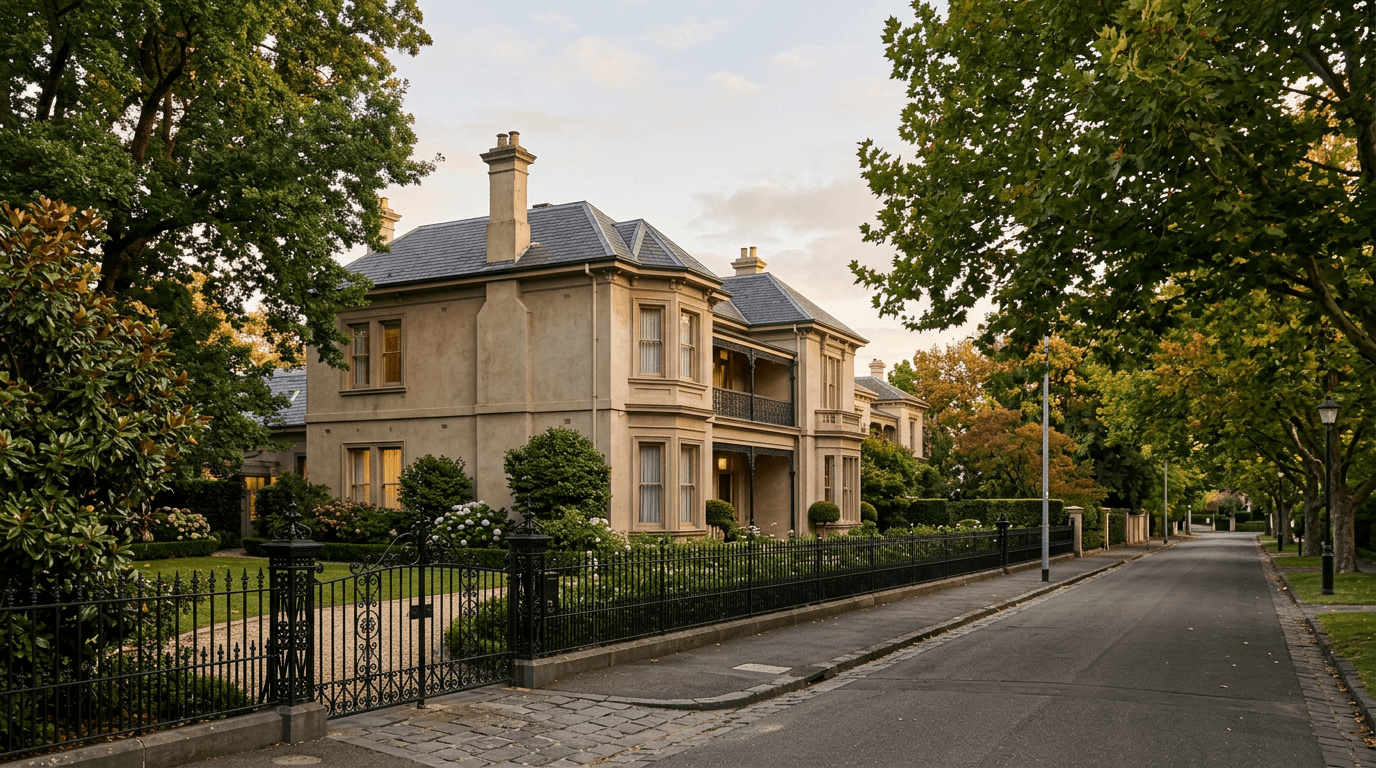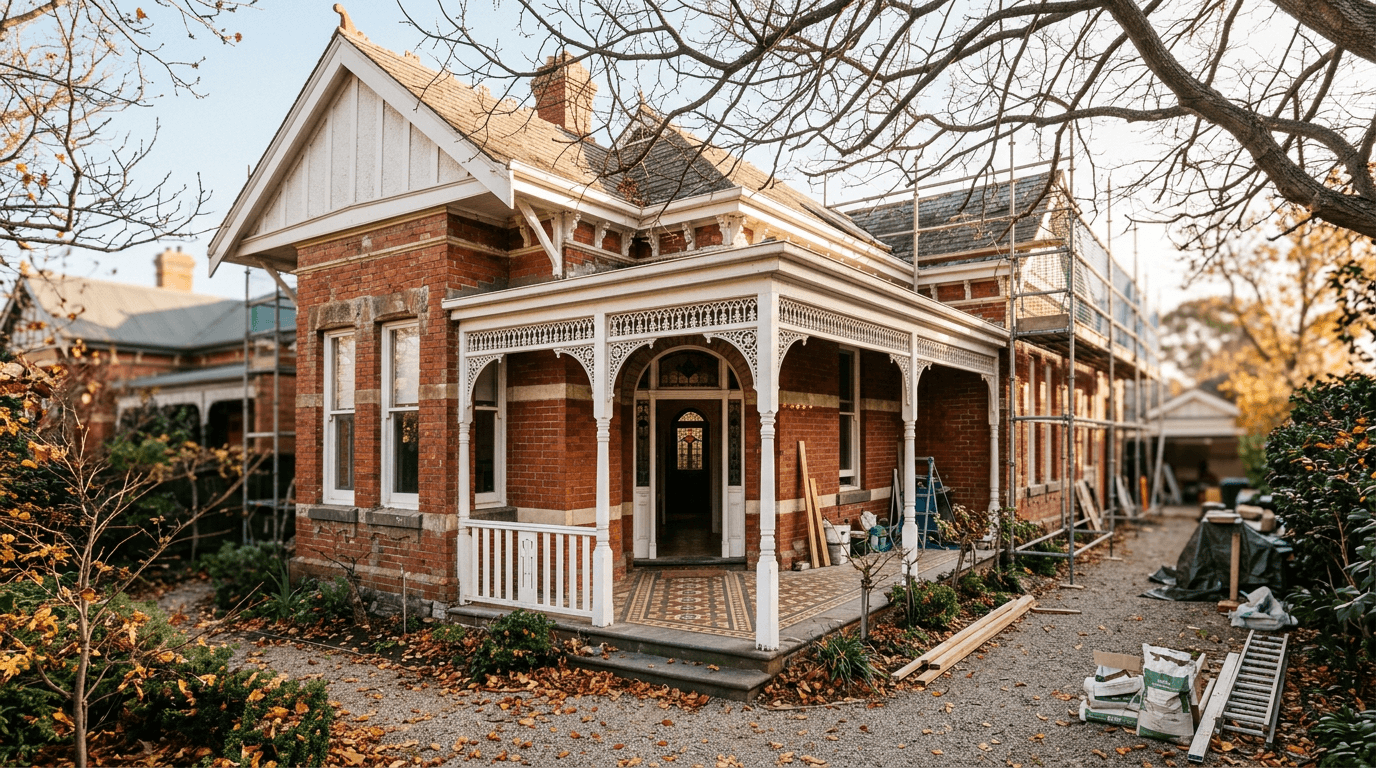
Hawthorn and Kew have some of the best period façades in Melbourne. Victorian terraces, Edwardian villas, interwar mansions on Cotham Road and Glenferrie. The façade is usually what made the buyer fall in love. It is also what their architect and builder spend the most time arguing about.
Here is what is worth saving on a period façade, what can be honestly remade, and where most restorations go wrong.
Tessellated tiles: almost always worth saving
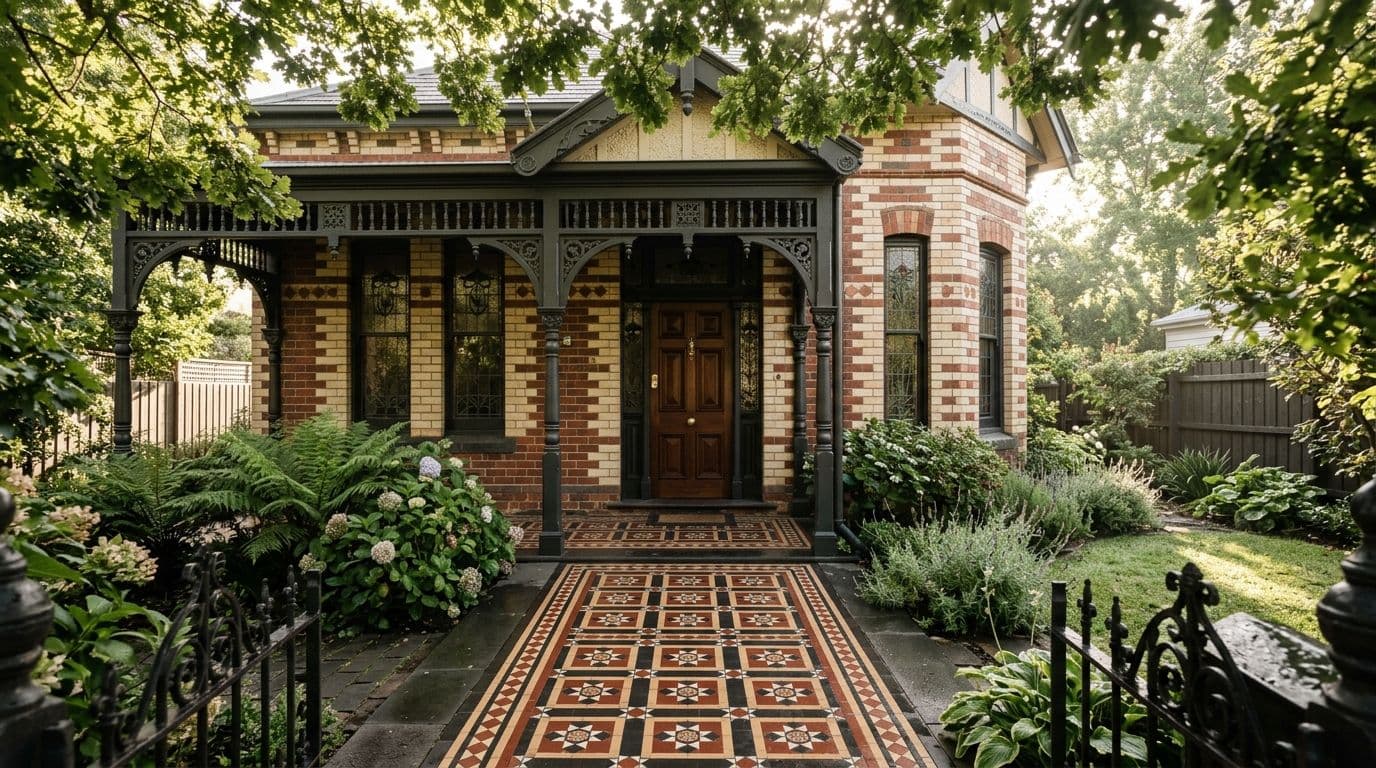
Original verandah tessellated tiles are a hallmark of these suburbs. They are also the cheapest detail to lose by accident. A bad demolition crew destroys them in an hour. A good one lifts, catalogues and reinstates them.
Where tiles are missing, replacement squares are still made by a few Australian and UK suppliers in the original geometric patterns. They are not cheap. They are far cheaper than the heritage planner refusing your permit.
Brickwork: clean it, do not paint it
Original red brick or polychrome brick has aged for a century. Once you paint it, you are committed to repainting it forever, and you have masked the building's most authentic surface. The right call is almost always a gentle clean: low pressure water, no harsh chemicals, no sandblasting.
Where mortar has failed, repointing must be done with lime mortar, not modern cement. Cement is harder than the brick and pulls moisture out of the face, shaling the brick over years. Lime mortar moves with the building. Use a tradesperson who can produce a sample patch first.
Rendered façades need patience
Edwardian and interwar mansions in Kew often present a rendered façade. The render is usually lime-based and breathable. Modern cement render trapped over it can blow off in sheets two winters in. We test small samples with a stonemason before any large surface decision.
Slate roofs: cost honest, last forever
Original slate is one of the rare materials whose lifecycle cost is genuinely beautiful. Welsh and Spanish slate, properly installed with copper or stainless nails, will last over a hundred years. The flashings and ridge cappings are usually what fail first. Replace those, do not replace the slate, unless you have to.
If slate is gone, composite roof tiles are a poor stand-in. Reroof with new slate or with a quality terracotta from a heritage-appropriate manufacturer. Pretend slate reads wrong in person.
Joinery: original where possible
Front doors, side panels, lead light, fanlights, fretwork. Restoring is almost always cheaper than commissioning a new replica that will never read quite right. We work with a joiner who can splice in matched timber for rot repair instead of full replacement.
What we plan for
- Selective demolition first, with a heritage-experienced demolition crew.
- Catalogued storage of removed tiles, hardware and trim.
- Sample patches for any clean, repoint, or render decision.
- Independent heritage consultant signing off the façade scope before lodgement.
If you are restoring a façade in Hawthorn or Kew, let's walk it. You may also find our broader heritage renovation guide useful.
This article shares general guidance from our experience as luxury home builders in Melbourne. Every project is different. For advice on yours, get in touch.